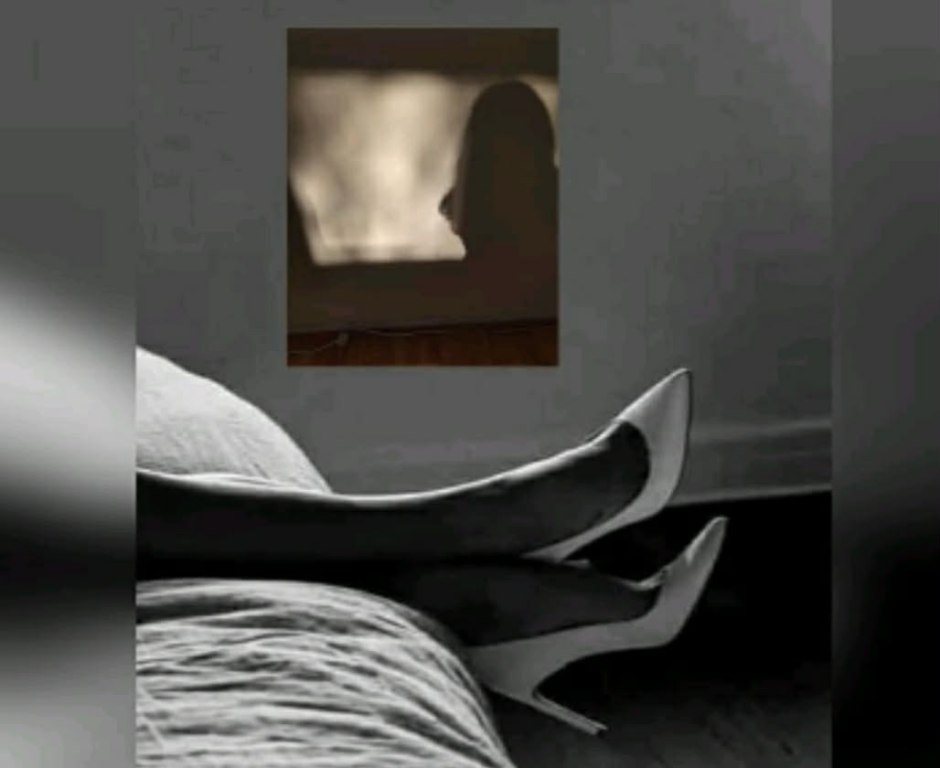
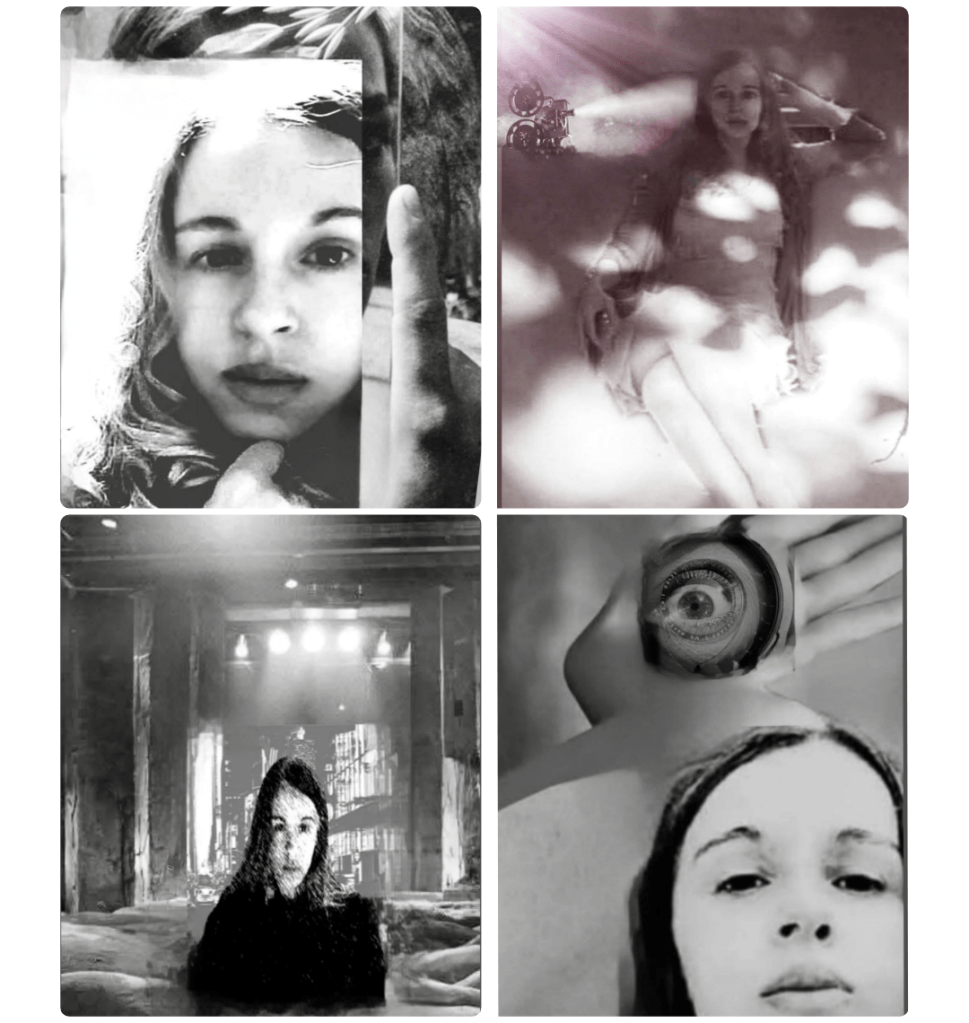
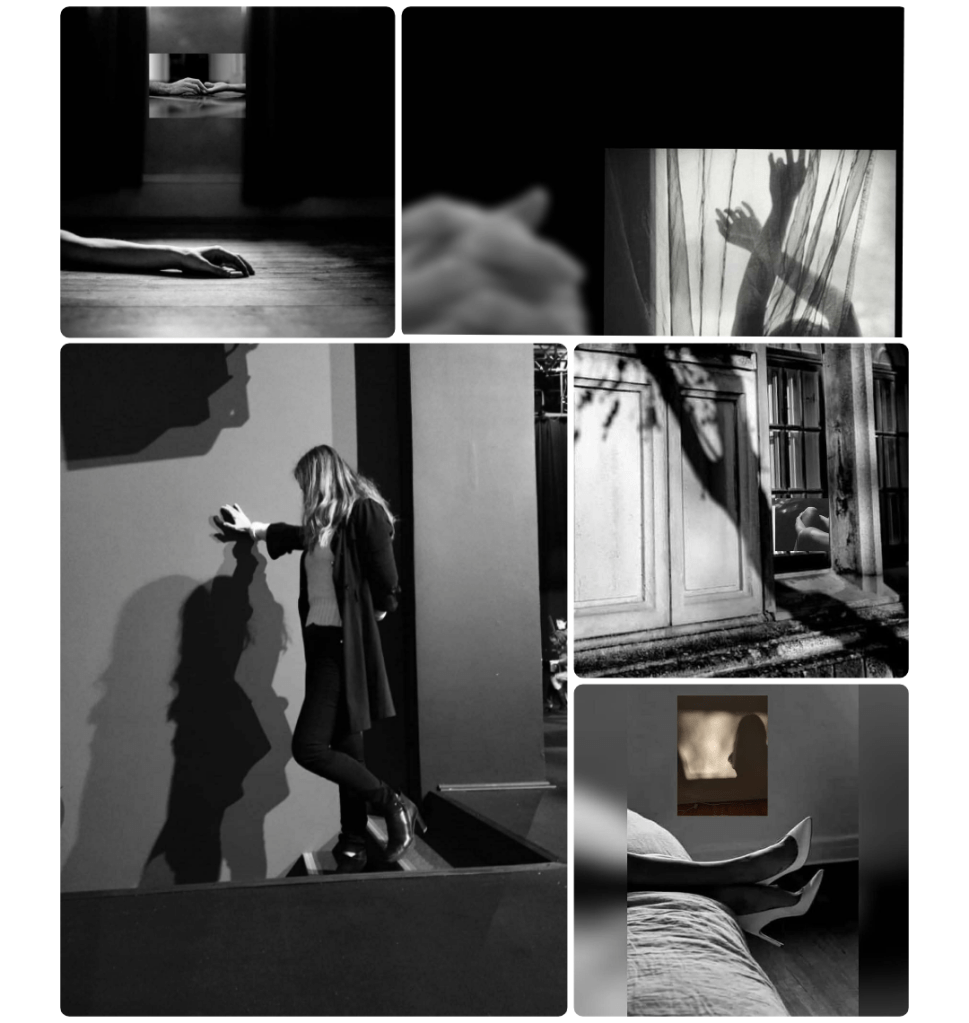
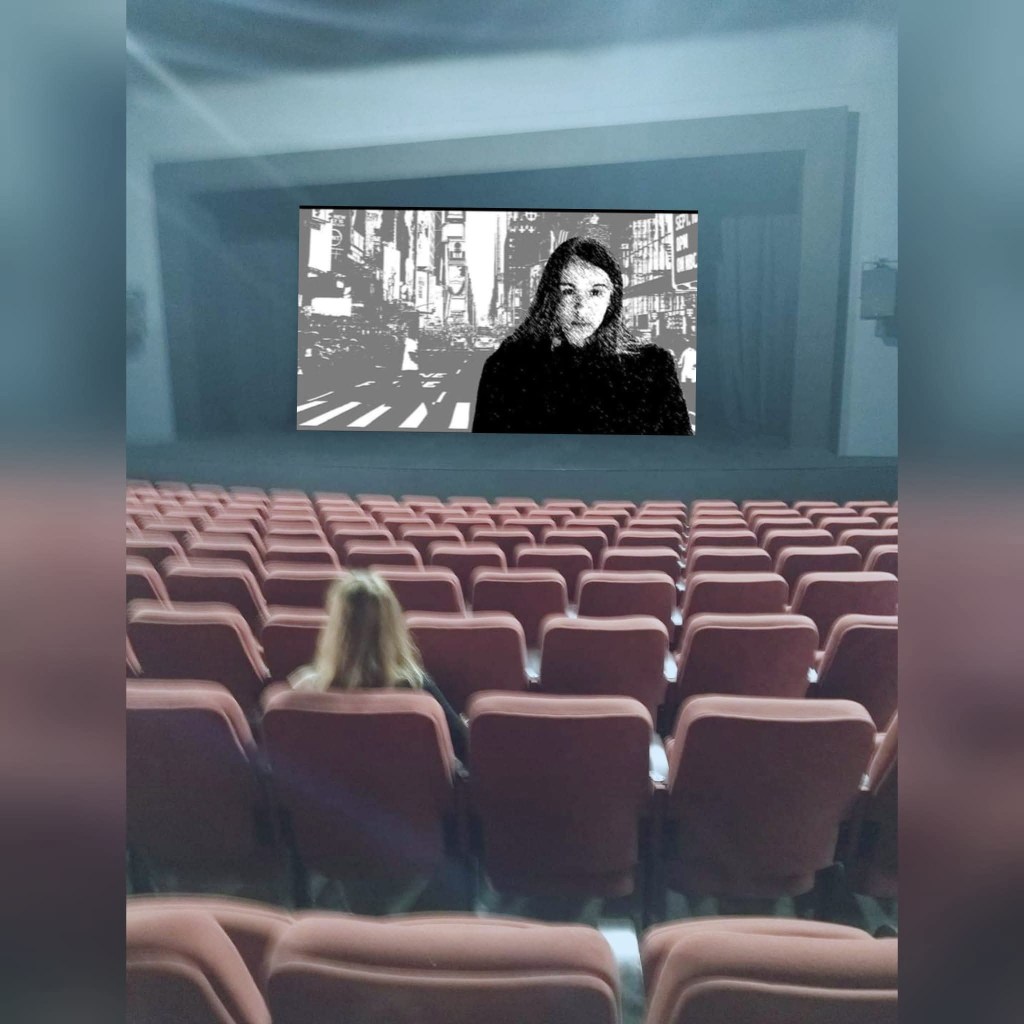
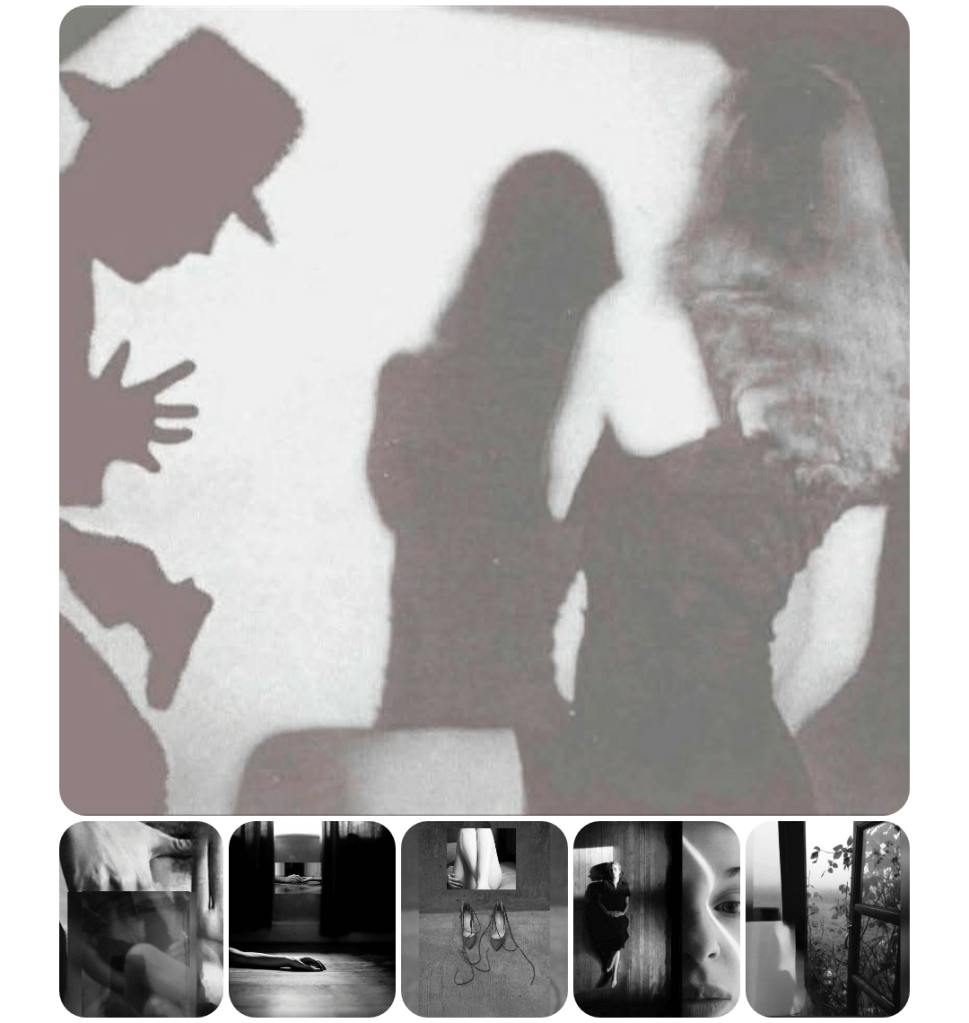
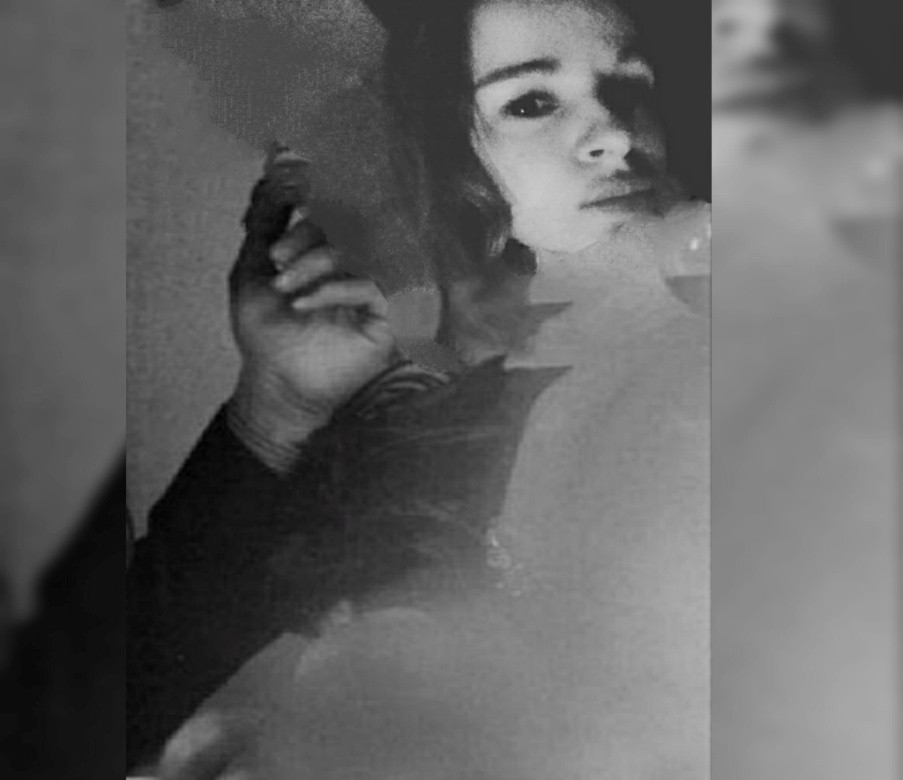
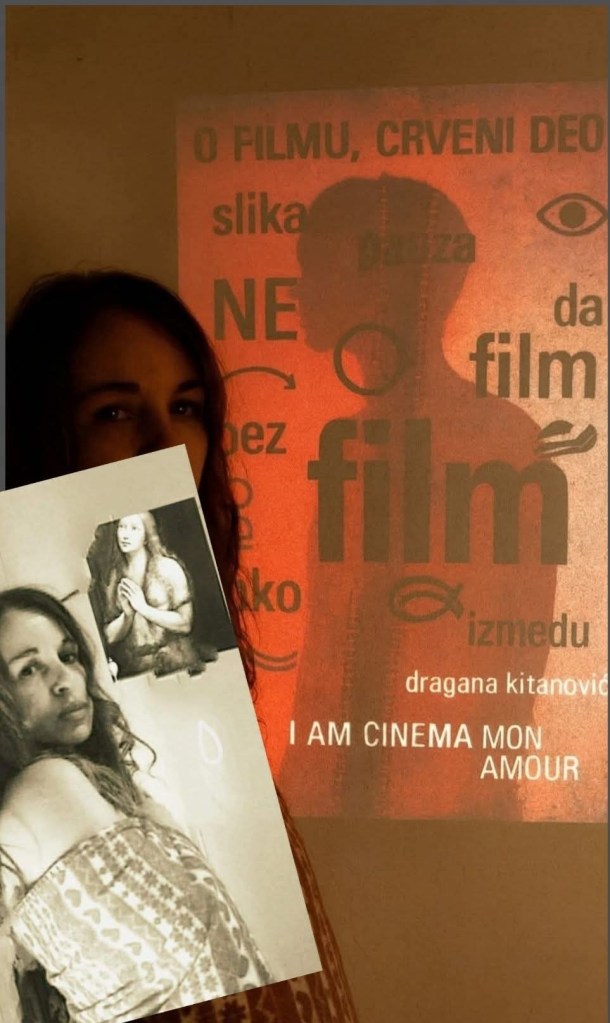
Serija fotografija Dragane Kitanović, Cinema, mon amour, predstavlja specifično umetničko istraživanje odnosa fotografije i filma, koje nastaje iz potrebe da se kinematografija misli kao autobiografski prostor. U pitanju je svojevrstan proces afektivnog samoprevođenja kroz sliku, pri čemusvaka fotografija predstavljasusret sa sopstvenim fragmentom –licem koje dolazi iz prošlosti, rukom koja pokušava da ga zadrži, telom koje se pamti kroz svetlo, zrnastost, senku… Svaka fotografija je kadar iz unutrašnjeg filma, fragment sopstva koji se ne prikazuje kroz linearnu naraciju, već kroz refleksiju i odsustvo. Autorka koristi sopstveno telo i njegovu relaciju sa svetlom da bi otvorila pitanje: šta znači biti subjekt u vremenu kada je pogled raspršen između ekrana, prozora i ogledala?
Mnogi savremeni umetnici koriste autoportret kao performans, sredstvo za javno izražavanje identiteta kroz vidljive vizuelne kodove. Kitanović, međutim, istražuje granicu između performativnosti i unutrašnje refleksije, pri čemu njene fotografije evociraju osećaj prisustva i odsustva istovremeno. Ovaj princip može se posmatrati kao novi model autoportreta, gde subjekt nije samo vizuelni objekt u tranziciji.
Rad se pozicionira u polju savremene umetničke fotografije i vizuelnih studija, oslanjajući se na teorijske uvide iz filozofije filma i teorije slike, ali ih ne ilustruje, već ih internalizuje u vizuelni jezik. Autoportret je shvaćen autoterijski, a lična prisutnost autorke u kadru funkcioniše kao epistemološki alat, a ne kao narcistički gest. Subjekt je istovremeno posmatrač i posmatrano čime se uspostavlja kritička distanca prema klasičnom shvatanju identieta i portretnoj fotografiji. Sam medij filma deluje kao unutrašnja metodološka matrica, kroz logiku kadriranja, trajanja, fragmentacije i rada sa senkom, dok fotografija preuzima ulogu medija zadržavanja i kontemplacije.
Fotografije Dragane Kitanović nisu samo autoportreti; one su teorijski eksperimenti koji ispituju granicu između filmskog kadra i fotografskog zapisa, između intime i javnog prostora.
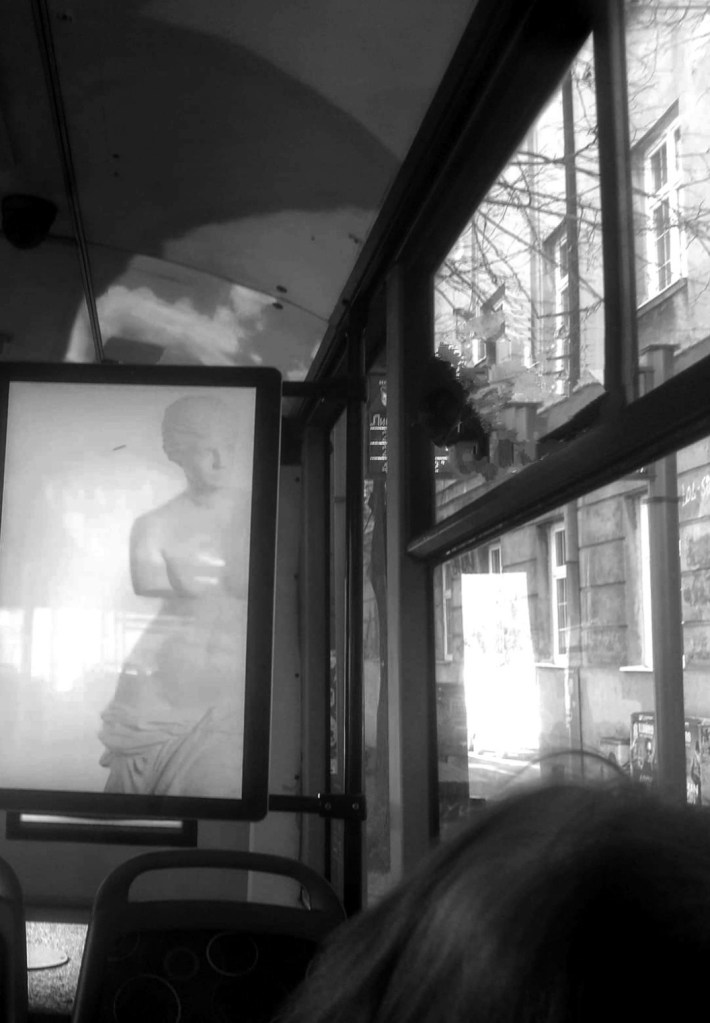
Kompozicije su promišljeno necentralizovane, sa čestim pomeranjem tela ka ivicama kadra, upotrebom polumraka, refleksija i arhitetonskih pragova (zid, prozor). Ovakav pristup destabilizuje klasičnu portretnu čitljivost i proizvodi stanje vizuelne napetosti između prisutnosti i odsustva, pri čemu pojedinačne fotografije ostvaruju puni smisao tek u međusobnom odnosu, nalik filmskoj sekvenci ili montaži afekata.
Serija Cinema, Mon Amour ne funkcioniše samo kao umetnički projekat, već kao vizuelna filozofija, gde se identitet preispituje kroz istorijske, filmske i umetničke reference, a fotografije ne samo da evociraju istoriju umetnosti i filma, već je reinterpretiraju kroz savremenu introspektivnu estetiku.
Značaj ovih fotografija leži u njegovom doprinosu savremenim raspravama o statusu fotografije u post-filmskom kontekstu. Cinema, mon amour ne pokušava da fotografiju pretvori u film, već da ispita šta od filma ostaje u fotografiji kada se pokret ukine, a trajanje ostane. Time se autoportret redefiniše kao vremenski i afektivni process, a ne kao reprezentacija ličnog identiteta. Fotografije su, u tom smislu, teorijski tekstovi u vizuelnoj formi- eseji o autonomiji, i etici pogleda.
U akademskom i institucionalnom kontekstu, serija se može vrednovati kao autentičan doprinos istraživanju medija filma i fotografije, kao i koncepta vremena u savremenoj fotografiji, budući da je u pitanju teorijski utemeljen i estetski suptilan umetnički rad visoke konceptualne doslednosti, koji uspešno integriše lično iskustvo u kritički i univerzalno čitljiv vizuelni diskurs.
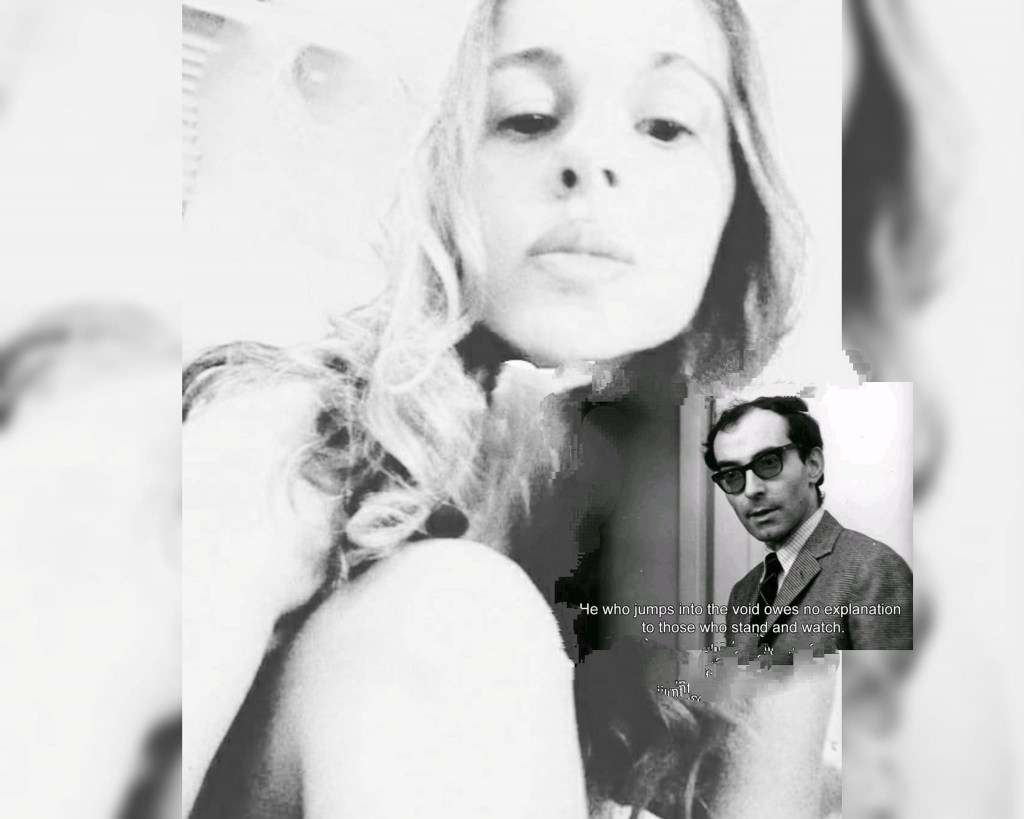
Kao što jedan od citata kaže: „Onaj koji skoči u prazninu ne duguje objašnjenje onima koji stoje i posmatraju.“
Serija je upravo taj skok: u prazninu koja je istovremeno intimna i univerzalna, u prostor gde se kinematografija i autobiografija stapaju u jedno.
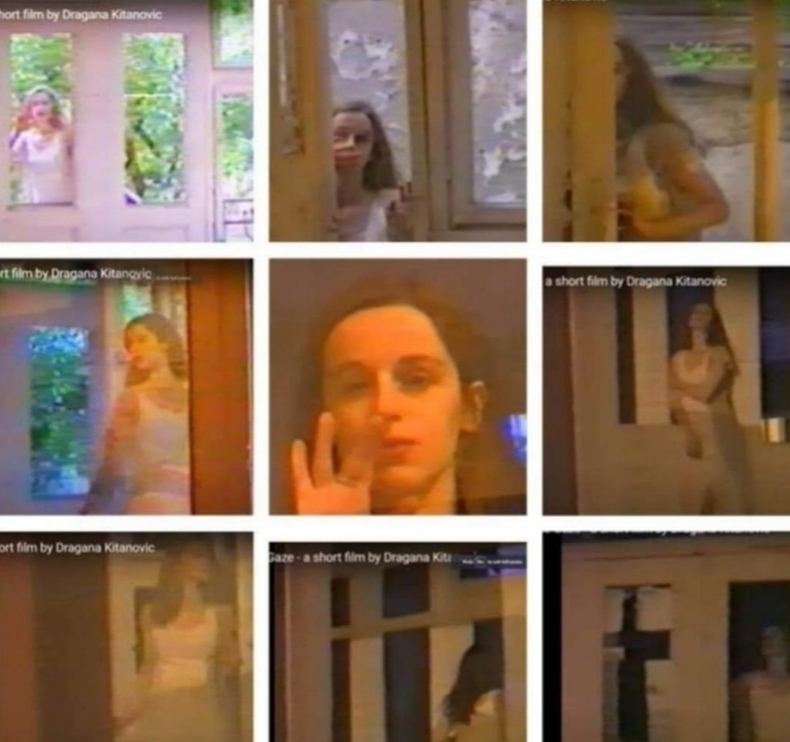
A conversation with Dragana Kitanović on her short film Inside the Gaze, by Tom Farell(2024)
Tom Farell: Your film doesn’t insist on being seen, it waits to be noticed. There’s a quietstrength in that refusal. Were you ever afraid it might disappear completely?
Dragana Kitanović: Yes, sometimes. But disappearance is also part of it. Some images don’t ask to last – they ask to flicker, like breath on a window. In my opinion, that moment when the film tries to make itself visible, to declare something, it begins to die. I want my film to live just at the edge of perception. Like a hand you almost felt on your shoulder, or a presence you sensed behind you, but never turned to see. That’s the space where the gaze becomes encounter, not spectacle. There, on that edge, it just lingers, quietly. To me, that’s not disappearance — it’s graceful impermanence. I always think that there’s a kind of dignity in an image that doesn’t insist. The moment it demands visibility, when it tries to announce itself, something in it begins to harden, the image forgets to listen. I want my film to exist just before that threshold, to live in the kind of perceptual periphery, where recognition is uncertain, but intimacy is possible, and finally unavoidable.
Tom: You keep the camera at a distance, sometimes behind glass, sometimes in shadow.What does it mean for you to observe, rather than to enter?
Dragana: To observe without entering is a kind of care. It means letting the other remain whole. I’m more interested in reverberation than in possession, in what stays with us when we step back. The glass is a border, but also a lens. It allows the gaze to tremble, not to dominate.
Tom: There’s a woman in the film – elusive, flickering, fragmented. And then we realize:that woman is YOU. You are both the one looking and the one being seen. What does thatdual role mean for you?
Dragana: It’s not a performance. It’s not even representation. It’s a form of exposure. I offered my own body to the frame not as a subject, but as a way to inhabit the gaze, as a way to be the rhythm of the film from within. Directing and performing at the same time is like breathing in and out simultaneously. It breaks linearity. I become part of the space, the delay, the silence. I don’t play her. I just dissolve into her.
Tom: I felt the sound of your film almost more than I heard it; or maybe I heard silence assound. What role does silence play in your film?
Dragana: From my point of view, silence is everything. It gives weight to light. It sharpens the edge of every movement. I don’t mean silence as absence, but as vibration – the sound of stillness. I wanted the viewer to fall into that quiet space and stay there, not knowing exactly why.
Tom Farell: You say the film listens to the image – but who, then, listens to the silence? Is ityou, or the camera?
Dragana: Perhaps it’s both. Or neither. Maybe silence listens to us. I’ve always felt that silence is not emptiness, but attentive space, a kind of breathing that precedes meaning. When I frame a stillness, I’m not capturing something fixed, but waiting to be addressed. The camera becomes a vessel, not an observer. It doesn’t interpret; it receives. So yes, I listen, but I also listen to thelistening. That tension is where the film begins to breathe.
Tom: Your frames move even when they don’t. There’s a rhythm in the stillness. How doyou approach movement – not as gesture, but as breath?
Dragana: In my film, I see movement as the body’s memory. Even when it doesn’t move, the body remembers. A flicker, a hesitation, a shift of light on skin – that’s enough. I think of movement not as choreography, but as listening. The film listens to the image. I wait for the image to move first.
Tom: There’s something sacred in that – not religious, but sacred. Like you’re tending tosomething fragile without naming it.
Dragana: Yes. I think fragility is a form of resistance. When an image doesn’t demand to beseen – when it just is – it opens up a space where attention becomes an ethical act. I never want to dominate the frame. I’d rather dwell with it. Sometimes I think the most radical gesture is to remain – quietly, without urgency. To stay long enough for something to arrive.
Tom: There’s grain in your film, that is, the visible texture. It feels like skin, or time. Is thattexture something emotional to you?
Dragana: Yes. Grain is the body of the image. It’s the evidence that something passed through light and stayed. It makes the image vulnerable, touchable. Sometimes I think grain is where the image feels most alive — where it refuses perfection, and becomes a wound. I always liked blurred images.
Tom: You called the film Inside the Gaze. What does it mean to you – to be inside the gaze,not just behind or in front of it?
Dragana: It means giving up control. Letting the gaze carry you. It means not directing it, not escaping it, but inhabiting it. And because I am both the gaze and the one inside it, the one who frames and the one who appears, I just had to surrender. And I liked that feeling. To be inside the gaze means floating between those positions. That’s where the film breathes.
Tom: As an actor, I was trained to inhabit the frame, to fill it with intention, presence,sometimes even silence. But your film taught me something else: that the frame can holdyou without asking to be filled. In Wenders’s films, I often played characters who drifted atthe edge of the story, not because they were lost, but because they were listening. I used tothink of those roles as minor, but now I see them as spaces of resonance. They didn’t movethe plot forward, but they held the atmosphere.Watching Inside the Gaze, I recognized that same ethic – not of performance, but of beingwith. Your film doesn’t ask the image to serve the actor, or the actor to serve the image. Itlets both breathe. And that’s rare. Most cinema wants to capture. Your film – lets go. As aperformer, that’s both terrifying and liberating – to be seen not for what you do, but forhow you remain.
Dragana: That’s beautifully said, Tom. I think presence is something we rarely speak of without wanting to define it. We want to give it shape, function, purpose. But what you’ve named as dwelling, not stepping into the story, but remaining beside it – that’s exactly the space I trust.
Tom Farrell: What moved me most was that you didn’t just make the film — you inhabitedit. You are behind the camera, yes, but also inside the frame. And yet, at no point did it feellike self-portraiture. It felt like you were holding space for the image, for the silence, forsomething unnamed to arrive. That’s not easy. Most people, when they’re both behind andin front of the lens, try to control the gaze. But you did the opposite — you surrendered toit. You let the camera become a witness, not a mirror. There’s a rare kind of trust in that.That expresses your trust in the image, in the process, in the viewer.
Dragana: You are totally right. When I’m in front of the camera, I’m not trying to express anything. I’m trying to receive. Not to become a character, but to allow the image to pass through me, to let it mark me without inscription. You say the camera met me. I’d like to believe that’s true and that it didn’t seek a portrait, but an encounter. One without claim. Perhaps in that space, we both became a little less visible, but somehow more real.
Tom: I don’t know if I ever told you this Dragana, but Inside the Gaze stayed with me longafter it ended. Not like a memory, more like a breath that hadn’t quite left the room.There’s a kind of friendship in that. The kind that doesn’t ask for attention, that doesn’tspeak often, but remains – quietly, faithfully. Your film does the same. It doesn’t close achapter. It leaves a door ajar. And maybe that’s what I loved most: the way it trusted theviewer enough to not explain, the way it trusted silence to carry what couldn’t be said. Thatkind of courage is rare. That kind of listening – even rarer.You made something that knowshow to step aside, and yet never disappear. I’m honored to have stood, if only for amoment, in the light your film offered.
Dragana: Thank you, Tom. Let it be LIGHT, all over the world!






 Stella polare